
Ol-Kalou By-Election: A Small Ballot With Big 2027 Shadows
By Martin Mburu
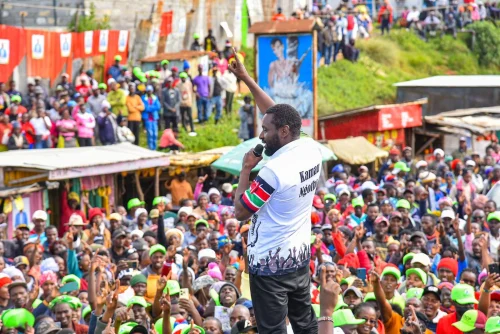 DCP Olkalou candidate Sammy Ngotho, after speaking to a crowd, submitted nomination papers to the IEBCBook an Article Inline BannerBook this slot
The views expressed in this article are those of the author and do not necessarily reflect the editorial position of Kenya Signal Room.
There is something about a by-election in Kenya that always feels bigger than the seat on paper.
On the surface, Ol-Kalou is simply choosing a new Member of Parliament after the passing of David Njuguna Kiaraho. But politically, this race has quickly become more than a constituency contest. It has become a testing ground, a rehearsal stage, and perhaps one of the clearest early signals of how the road to 2027 may be fought in Mt Kenya.
Ol Kalou is not just voting. Ol Kalou is being watched.
A Local Race That Has Refused to Stay Local
The first mistake anyone can make is to treat this by-election as a quiet replacement exercise. It is not.
The moment senior political actors started trooping into Nyandarua, the race changed temperature. UDA wants to show that it still has structure, money, machinery, and government-side confidence in Mt Kenya. DCP wants to prove that Rigathi Gachagua’s political voice is not just noise from rallies, but an actual ballot-moving force.
Then there is Jubilee, still trying to defend the emotional memory of a seat it held through the late Kiaraho. Its challenge is difficult. Sympathy alone does not win elections, especially when the political field has become crowded, angry, and restless.
UDA’s Campaign: Development, Machinery, and Message Discipline
UDA’s campaign around Samuel Muchina Nyagah appears to be built on three pillars: development, state-linked confidence, and disciplined visibility.
The message is simple: vote for a candidate who can work with government and unlock projects. That is a familiar Kenyan campaign language. Roads, electricity, stadiums, bursaries, markets, jobs, and access to national offices. It is practical, direct, and easy to sell in villages where people are tired of speeches that do not repair anything.
The presence of leaders such as Moses Kuria and other government-allied figures shows that UDA is not treating Ol Kalou casually. They understand the symbolism. A loss here would be interpreted nationally, even if the official explanation would try to localize it.
But UDA also faces a challenge. When a campaign leans too heavily on government muscle, voters can begin to ask whether they are being persuaded or managed. Mt Kenya voters, especially in the current mood, are politically alert. They can receive development promises with one hand and still vote with resentment in the other.
DCP’s Campaign: Emotion, Rebellion, and the Gachagua Factor
DCP’s campaign around Sammy Kamau Ngotho is playing a different game.
Its strongest asset is not necessarily money or state power. It is emotion. The DCP message is tapping into a feeling that many Mt Kenya voters have been expressing in different ways: betrayal, political disrespect, economic pressure, and the need to “send a message.”
That kind of campaign can be dangerous for an incumbent government party. Emotional campaigns do not always require perfect organization. Sometimes they only require a crowd that believes the ballot is their microphone.
DCP also benefits from the Gachagua factor. Whether one likes him or not, Gachagua has managed to turn his fallout with President William Ruto into a political identity. In Ol Kalou, he is not merely campaigning for a candidate. He is campaigning for proof that his influence still bites.
Still, DCP has its own wounds. Reports of disputes after nominations and the defection of a runner-up to UDA show that the party is not immune to the old Kenyan problem of internal mistrust. A protest movement must be careful. If it starts looking like the very system it criticizes, voters may punish it quietly.
Jubilee’s Dilemma: Memory Is Not Enough
Jubilee enters this contest with history. The late Kiaraho held the seat on a Jubilee ticket, and that matters. In a respectful political culture, his legacy should be handled with dignity.
But legacy is not a campaign plan.
Jubilee’s biggest problem is that the ground has moved. Mt Kenya politics is no longer arranged neatly around the old Jubilee architecture. The party must decide whether it is defending a seat, protecting a memory, or trying to reintroduce itself as a living political vehicle.
That is not easy. Voters may respect the past, but they vote based on the present pressure in their pockets, farms, homes, and schools.
## What the Campaigns Reveal About Kenyan Politics
The Ol Kalou race tells us something uncomfortable but important.
Kenyan campaigns are still deeply personal, highly emotional, and heavily symbolic. A by-election becomes a referendum. A candidate becomes a messenger. A constituency becomes a national stage.
But there is also a shift. Voters are listening more keenly. They are watching who shows up, who listens, who insults, who offers solutions, and who treats them like a ladder to climb national politics.
In Ol Kalou, the winning team will not be the one with the loudest convoy. It will be the one that best balances three things: local credibility, emotional connection, and believable delivery.
The Real Question: Who Owns the Ground?
Every serious campaign eventually returns to one question: who owns the ground?
Not who has the biggest rally photos. Not who has the loudest online army. Not who has the most senior visitors from Nairobi.
The ground is owned by the team that knows the churches, markets, boda boda stages, women groups, farmers’ networks, youth clusters, clan whispers, and ward-level grievances. The ground is owned by the campaign that can convert excitement into turnout.
That is where Ol Kalou will be won or lost.
UDA has machinery. DCP has momentum. Jubilee has memory. The opposition has a unity experiment. The independent and smaller-party candidates have a chance to disrupt margins.
But on election day, slogans will not queue at polling stations. People will.
Ol-Kalou Is Sending Kenya a Message
Whichever way Ol-Kalou votes, the result will travel far beyond Nyandarua.
If UDA wins, it will claim the government still has a grip on Mt Kenya. If DCP wins, Gachagua will walk away with a political drum louder than before. If Jubilee performs strongly, it may remind the region that old networks are not dead.
That is why this by-election matters.
Ol-Kalou is not merely filling a vacancy. It is measuring anger, loyalty, memory, fear, hope, and political discipline.
And in Kenya, when a small ballot begins to carry big emotions, wise analysts pay attention.
On the surface, Ol-Kalou is simply choosing a new Member of Parliament after the passing of David Njuguna Kiaraho. But politically, this race has quickly become more than a constituency contest. It has become a testing ground, a rehearsal stage, and perhaps one of the clearest early signals of how the road to 2027 may be fought in Mt Kenya.
Ol Kalou is not just voting. Ol Kalou is being watched.
A Local Race That Has Refused to Stay Local
The first mistake anyone can make is to treat this by-election as a quiet replacement exercise. It is not.
The moment senior political actors started trooping into Nyandarua, the race changed temperature. UDA wants to show that it still has structure, money, machinery, and government-side confidence in Mt Kenya. DCP wants to prove that Rigathi Gachagua’s political voice is not just noise from rallies, but an actual ballot-moving force.
Then there is Jubilee, still trying to defend the emotional memory of a seat it held through the late Kiaraho. Its challenge is difficult. Sympathy alone does not win elections, especially when the political field has become crowded, angry, and restless.
UDA’s Campaign: Development, Machinery, and Message Discipline
UDA’s campaign around Samuel Muchina Nyagah appears to be built on three pillars: development, state-linked confidence, and disciplined visibility.
The message is simple: vote for a candidate who can work with government and unlock projects. That is a familiar Kenyan campaign language. Roads, electricity, stadiums, bursaries, markets, jobs, and access to national offices. It is practical, direct, and easy to sell in villages where people are tired of speeches that do not repair anything.
The presence of leaders such as Moses Kuria and other government-allied figures shows that UDA is not treating Ol Kalou casually. They understand the symbolism. A loss here would be interpreted nationally, even if the official explanation would try to localize it.
But UDA also faces a challenge. When a campaign leans too heavily on government muscle, voters can begin to ask whether they are being persuaded or managed. Mt Kenya voters, especially in the current mood, are politically alert. They can receive development promises with one hand and still vote with resentment in the other.
DCP’s Campaign: Emotion, Rebellion, and the Gachagua Factor
DCP’s campaign around Sammy Kamau Ngotho is playing a different game.
Its strongest asset is not necessarily money or state power. It is emotion. The DCP message is tapping into a feeling that many Mt Kenya voters have been expressing in different ways: betrayal, political disrespect, economic pressure, and the need to “send a message.”
That kind of campaign can be dangerous for an incumbent government party. Emotional campaigns do not always require perfect organization. Sometimes they only require a crowd that believes the ballot is their microphone.
DCP also benefits from the Gachagua factor. Whether one likes him or not, Gachagua has managed to turn his fallout with President William Ruto into a political identity. In Ol Kalou, he is not merely campaigning for a candidate. He is campaigning for proof that his influence still bites.
Still, DCP has its own wounds. Reports of disputes after nominations and the defection of a runner-up to UDA show that the party is not immune to the old Kenyan problem of internal mistrust. A protest movement must be careful. If it starts looking like the very system it criticizes, voters may punish it quietly.
Jubilee’s Dilemma: Memory Is Not Enough
Jubilee enters this contest with history. The late Kiaraho held the seat on a Jubilee ticket, and that matters. In a respectful political culture, his legacy should be handled with dignity.
But legacy is not a campaign plan.
Jubilee’s biggest problem is that the ground has moved. Mt Kenya politics is no longer arranged neatly around the old Jubilee architecture. The party must decide whether it is defending a seat, protecting a memory, or trying to reintroduce itself as a living political vehicle.
That is not easy. Voters may respect the past, but they vote based on the present pressure in their pockets, farms, homes, and schools.
## What the Campaigns Reveal About Kenyan Politics
The Ol Kalou race tells us something uncomfortable but important.
Kenyan campaigns are still deeply personal, highly emotional, and heavily symbolic. A by-election becomes a referendum. A candidate becomes a messenger. A constituency becomes a national stage.
But there is also a shift. Voters are listening more keenly. They are watching who shows up, who listens, who insults, who offers solutions, and who treats them like a ladder to climb national politics.
In Ol Kalou, the winning team will not be the one with the loudest convoy. It will be the one that best balances three things: local credibility, emotional connection, and believable delivery.
The Real Question: Who Owns the Ground?
Every serious campaign eventually returns to one question: who owns the ground?
Not who has the biggest rally photos. Not who has the loudest online army. Not who has the most senior visitors from Nairobi.
The ground is owned by the team that knows the churches, markets, boda boda stages, women groups, farmers’ networks, youth clusters, clan whispers, and ward-level grievances. The ground is owned by the campaign that can convert excitement into turnout.
That is where Ol Kalou will be won or lost.
UDA has machinery. DCP has momentum. Jubilee has memory. The opposition has a unity experiment. The independent and smaller-party candidates have a chance to disrupt margins.
But on election day, slogans will not queue at polling stations. People will.
Ol-Kalou Is Sending Kenya a Message
Whichever way Ol-Kalou votes, the result will travel far beyond Nyandarua.
If UDA wins, it will claim the government still has a grip on Mt Kenya. If DCP wins, Gachagua will walk away with a political drum louder than before. If Jubilee performs strongly, it may remind the region that old networks are not dead.
That is why this by-election matters.
Ol-Kalou is not merely filling a vacancy. It is measuring anger, loyalty, memory, fear, hope, and political discipline.
And in Kenya, when a small ballot begins to carry big emotions, wise analysts pay attention.